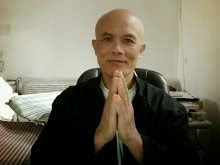


Master's Considerations Tribuana

Master’s consideration : (updated 12h00, 21 january 2016..
FOR STUDENT CONSIDERATION klick here.
in reality, Master and Student is the dwelling of knowledge it self. ever-transform, ever-change....mysterious link.
1. Accept difficulties and his limits in front of his/her students.
2. Keep maintaining his/her silence.
3. Be calm and serene, aware of emotional expression.
4. Restful thought and clear.
5. Be modest, simple and essential.
6. Avoid jokes that despise students.
7. Gentle and anticipating, see ahead.
8. Be patient with students that has no courage and weak.
9. To educate hard students with good manner and advise.
10. Don’t shout at students who ask question.
11. Be interested by a students question and listen attentively.
12. Understand the question and answer only the question.
13. Accept excuses and put things in its place.
14. Accept his fault and admit/honor the truth.
15. Prevent student from learning disastrous thing.
16. Awaken the three worlds (body, emotion and thought) toward the path of universal spiritual way of life.
17. Be precise, clear and firm; be just.
18. By necessity a master could be authoritarian without becoming authoritarian.
19. To prefer/encourage expression then submission.
20. To know how to be: sometimes be in front as a guide, sometimes in the middle as participant, sometimes behind watching and observing so everything going well.
21. Always ready to give and transmit the knowledge with caring-love.
22. The aim/goal and the satisfaction of a master is to transform a student/disciple into a teacher/master.
23. Offer advise and explanation according to students level/maturity. In this case it is useful to know in advance the students inner-situation, his/her “ 3 worlds” expressions and his/her goal in action/doing.
24. Respect students opinions and indicate where she/he will arrive with that opinion.
25. Keep maintaining the behavior and appearance of a master, it is the mirror of his/her healthiness in body, emotion, thought and spirit.
26. Before all, to serve student first for the common purpose/cause/work.
27. His/her mind and thought as his presence radiant produce clear light surrounding. Charismatic being.
28. Thinking analytically and globally at the same time without neglecting the important presence of the intuition.
29. In his/her every expression of the three worlds (body, emotion and thought) always contain compassion and universal love.
30. Every action should be natural, in the way to honor the law of nature, to cultivate nature.
31. When master Tribuana answer one's question in front of others, she/he must feed other listener/participants too.
32. When student ready, master present; when master ready, student comes. Master+student=path of knowledge ... ancestral heritance.
33. Tribuana master consider all presence as master, transmitter. So, master tribuana consider their students as "master to awaken and cultivate together".
34. A GreatMaster, consider all around him/her are Grand Master, ready to deliver teaching/ knowledge/ THE WAY. The art:" how to hear? Make it real and here now, yet nowhere =everywhere.
N°: 1-15 from : Hakki Ibrahim, Turkish wise man, translate by Ali Ichsan Kaleçi into French, and by Tapa into English
N°: 16-34 from : Tapa Sudana
Ce qu'un Maître prend en considération lorsqu'il est avec ses élèves,
élève transforme son maître, et maître transforme son élève.
à conformer dans la loi de transmission:
il n'y a pas élève sans maître,
il n'y pas maître sans élève.
Maitre et élève produiront connaissance ensemble, le savoir, la voie.
1.
Accepter les
difficultés et les barrières avec ses élèves.
2.
Garder son
silence.
3.
Être calme et
serein, veiller l’expression émotionnelle.
4.
Avoir une pensée
reposée et claire.
5.
Être modeste,
simple et essentiel.
6.
Abandonner les
blagues qui puissent être reçues comme du mépris par certains élèves.
7.
Être doux et
prévoyant avec ses élèves.
8.
Être patient avec
les élèves faibles et sans courage.
9.
Éduquer l'élève
dur avec de bonnes manières et des conseils.
10. Ne pas engueuler l'élève qui pose des questions.
11. S'intéresser à la question de l'élève et l'écouter
attentivement.
12. Comprendre la question et répondre juste à la
question.
13. Accepter les excuses, remettre les choses à leur
place.
14. Accepter son erreur et se soumettre à la vérité.
15. Empêcher les élèves d'apprendre des choses néfastes.
16. Éveiller ses trois mondes (corps, émotion, pensée)
dans la voie de la spiritualité du monde universel.
17. Être précis, clair, ferme avec justesse. La Justesse
concorde avec lieu, temps et situation, ajuster sur mesure des élèves à leur
niveau.
18. Par nécessité un maître prend l’apparence ou attitude
d’un autoritaire, sans y demeure, précis et efficace.
19. Solliciter l’expression plutôt que la soumission.
20. Savoir être : par fois devant comme guide, par fois au
milieu comme participant, par fois derrière comme celui qui surveiller.
21. Toujours prêt à donner, à transmettre la connaissance
avec amour, être soigneux.
22. Le but ou la satisfaction d’un maître c’est de
transformer ces élèves en maîtres. (Un maître est celui /celle qui maîtriser
quelque chose : a savoir la différence entre maître corporelle, émotionnel,
intellectuel et spirituel). Maître Tribuana considère et respecte tout comme
maître qui transmettre et émettre une connaissance.
23. Offrir un conseil (explication), adapté selon la
maturité des élèves. Pour cela : à savoir en avance, quel est l’état de son
élève, et quel est le but de sa parole. Veiller la voie de la sagesse.
24. Respecter l’opinion de ses élèves mais indiquer ou va
arriver l’élève avec son opinion. Chaque opinion porte leur propre raison.
25. Maintenir quotidiennement l’apparence et les
comportements d’un maître (ce sont les miroirs de sa santé physique,
émotionnelle, intellectuelle et spirituelle) ;
26. Avant tout, servir d’abord l’élève en premier, pour le
but d’avancer le travail en commun.
27. Sa pensée, comme sa présence, avoir une présence
émettrice éclairante pour son entourage. Être charismatique.
28. Avoir à la fois une pensée analytique et globale sans
ignorer l’important rôle de l’intuition.
29. Avoir toujours la présence de la compassion et l’amour
universelle dans tous ces actes (toute expression des trois mondes).
30. Tout acte doit être naturel ou dans la voie pour
honorer la nature, à cultiver.
31. Quand le maître Tribuana répondre la question d'un
participant/e, il/elle doit nourrir tous présents participants.
32. Quand le maître est prêt, l'élève arrive; quand
l'élève est prêt, le maître présent. Maitre + élève= passage de connaissance
... ancestrale /nature/ cosmos.
33. Maître Tribuana considère tout présence comme émetteur
/ émettrice de connaissance/enseignement. Donc, honorer même ses élèves comme
éventuelles « maître chez élève endormi » à éveiller et cultiver
ensemble".
34. Un bon sage maitre, en éveil, considère tous son
entourage comme "maitre" prêt-à-délivrer ses secrets, son enseignement.
N°:1-15 de : Hakki Ibrahim, Sage Turque, traduit par Ali Ichsan KaleçiN°: 16-34 de : de Tapa Sudana pour la voie TRIBUANA.
Pour les élèves?
ah , voici les Considération à veiller chez l'élève.
posted by tribuana tapa sudana | 12:37 PM

3 Comments:
Dear Emanuel Karyotakis
Félicitations for Amadou Petros,
happy to read your news and your work in Patra,
hope to see your family one day
hope you are happy in good health
love
tapa
Well, Tapa, what about the disciple?
dear Sergio, about the disciple, those 30 points of reference can be applied for disciple too, with adaptation, or try to see and to understand in other side, disciple create master, master create disciple, both side honor the same "thing" in evolution.
Post a Comment
<< Home